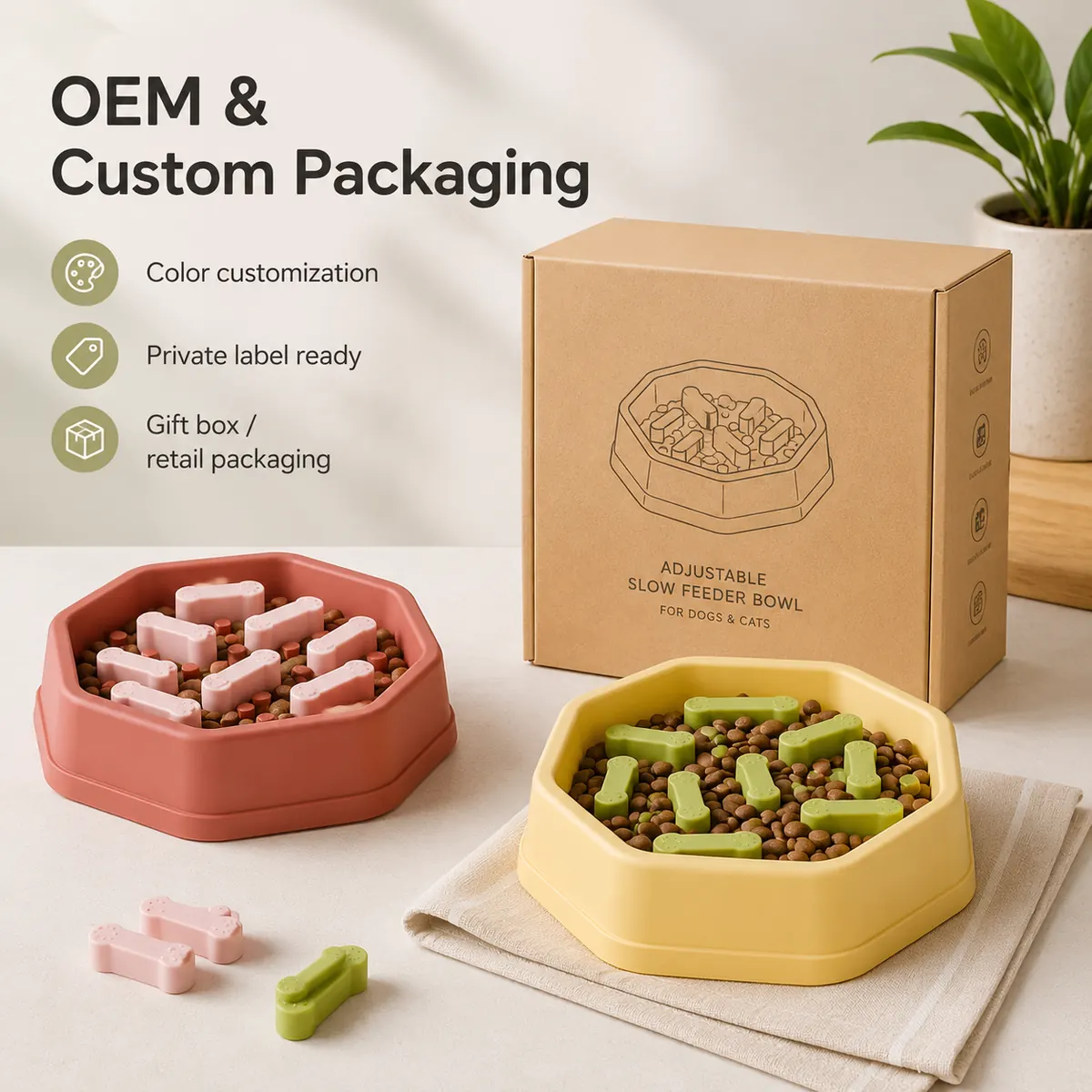
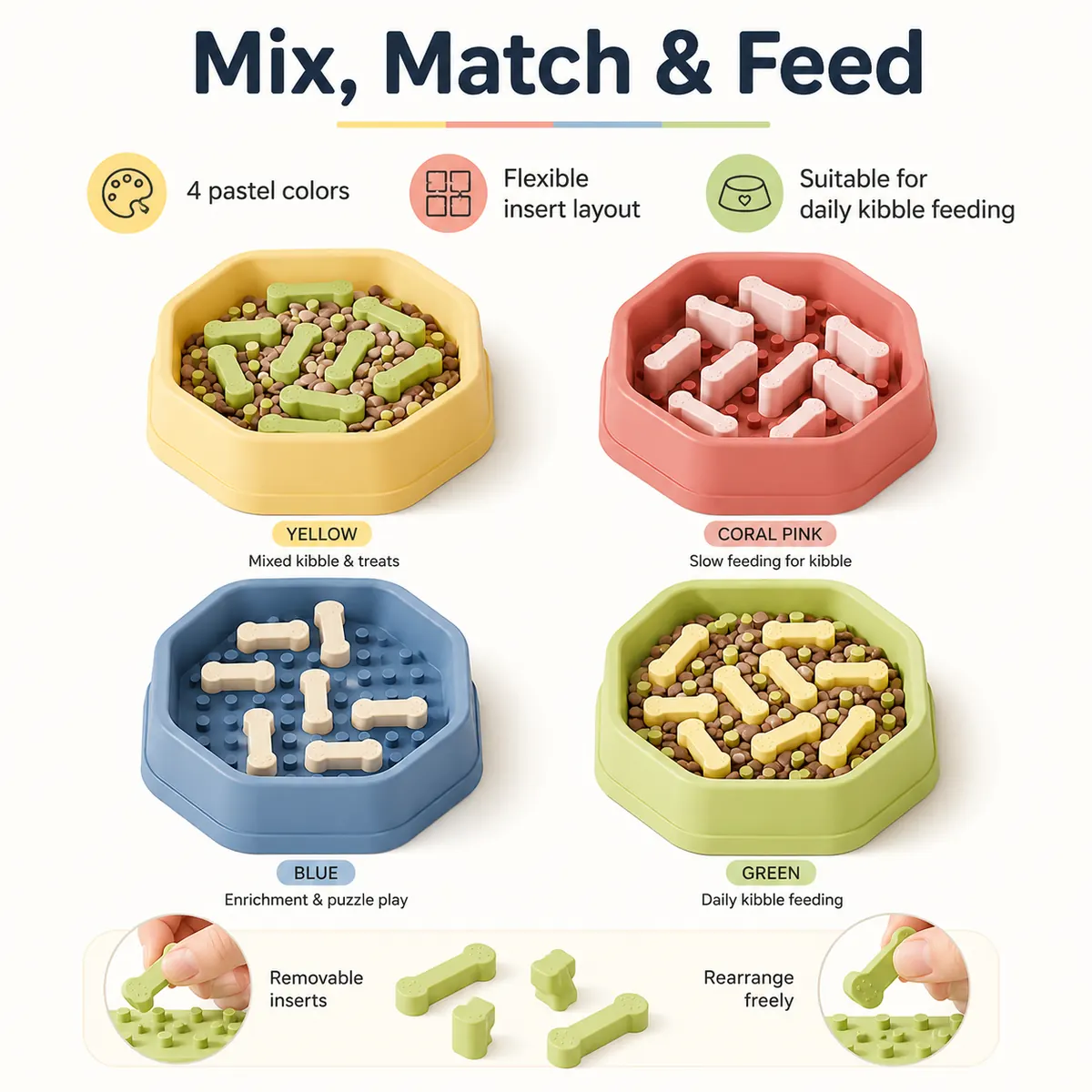
Flexible feeding routineMake “adjustable” visible, lockable and easy to explain
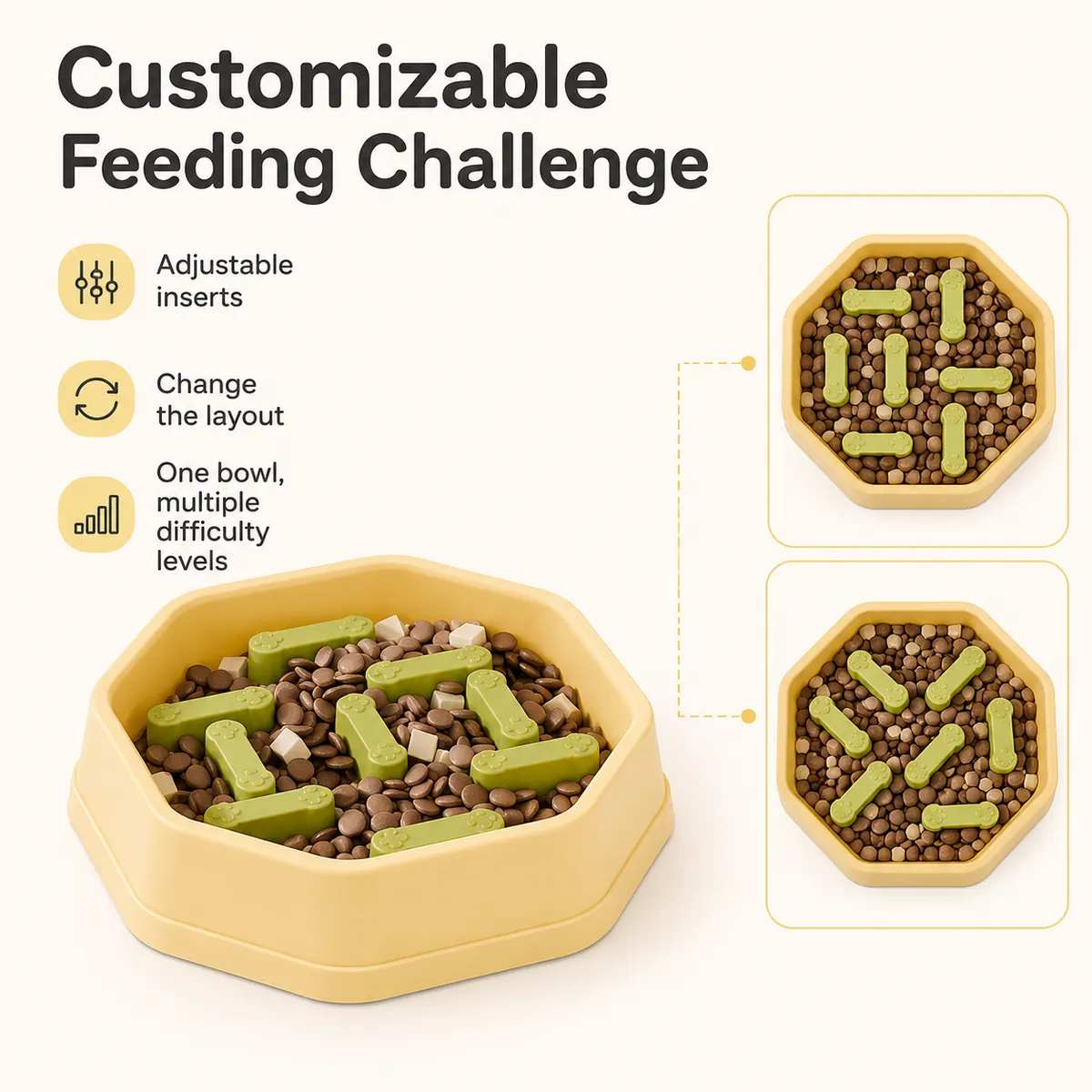
An adjustable slow-feeder bowl can stand out because one product may suit changing routines or different pet sizes, but the word adjustable is too vague for confident purchasing. Buyers should show exactly what changes—height, angle, maze insert or capacity—and how the selected position stays fixed during feeding.
Adjustment should feel intuitive before the first meal
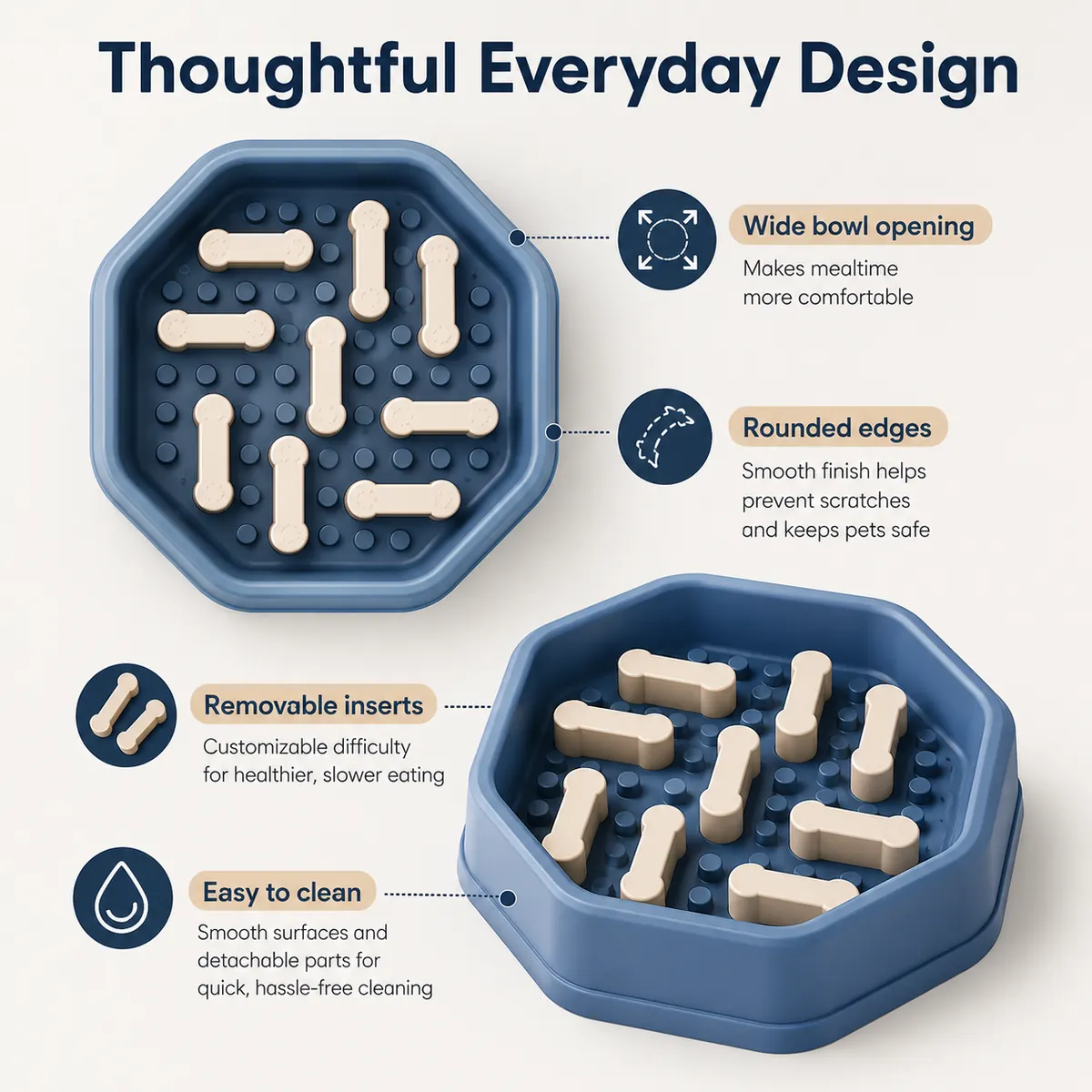
Ask an unfamiliar user to assemble and adjust the sample without verbal help. Note any pinch points, loose parts or settings that look secure but move under load. Measure every usable position and test the bowl with representative dry and wet food, while checking whether adjustment hardware creates extra crevices that complicate cleaning.
Demonstration content can do more than another lifestyle photo
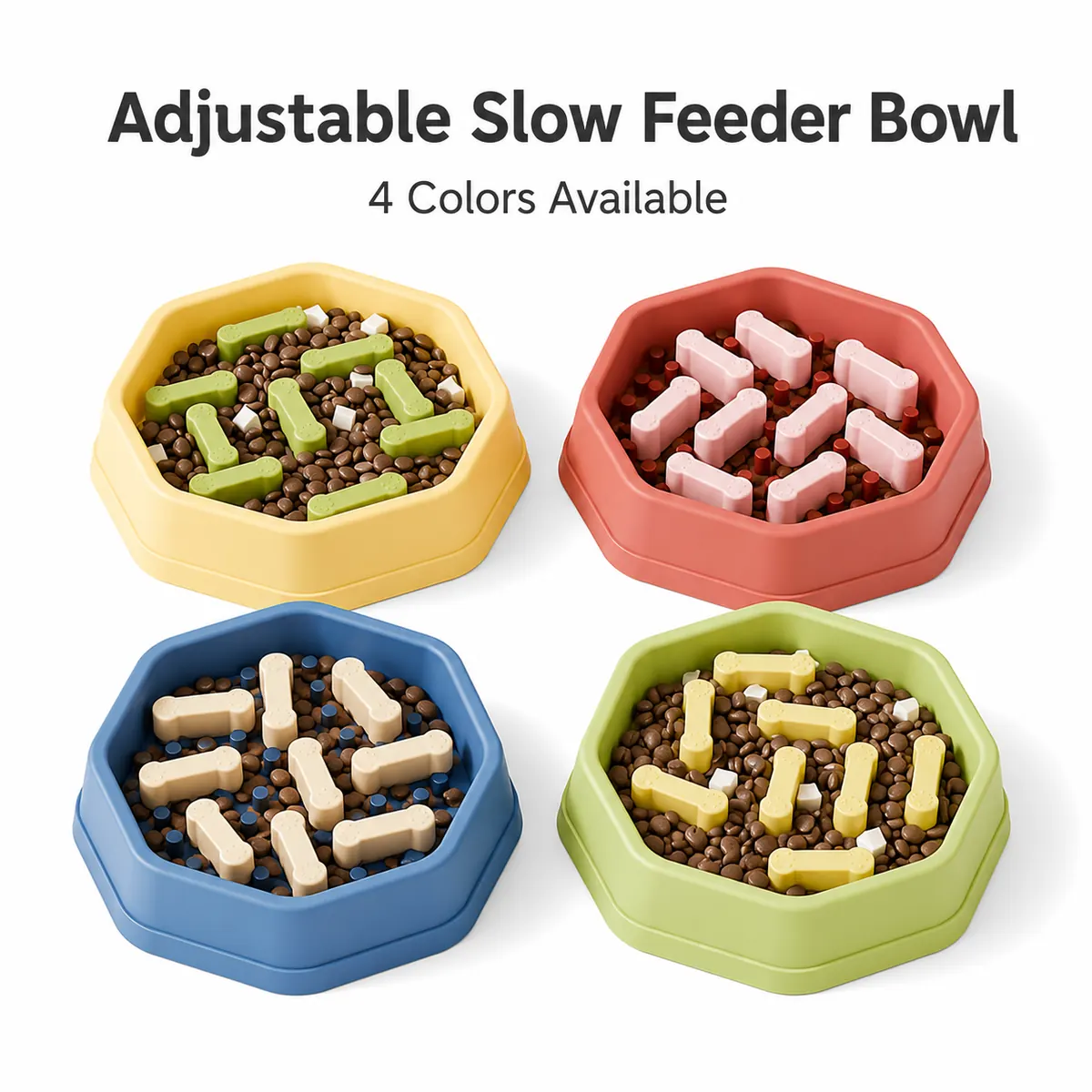
A short sequence of setup images, one comparison diagram and a clearly labeled parts list answer the questions shoppers actually have. If several colors or bowl inserts are offered, confirm which combinations belong to one SKU. Retail packaging should protect moving parts and keep the adjustment instructions visible after opening.
Questions to settle on the Adjustable Slow Feeder Bowl sample
- What adjusts and the measured range of positions
- Locking method, pinch points and loaded stability
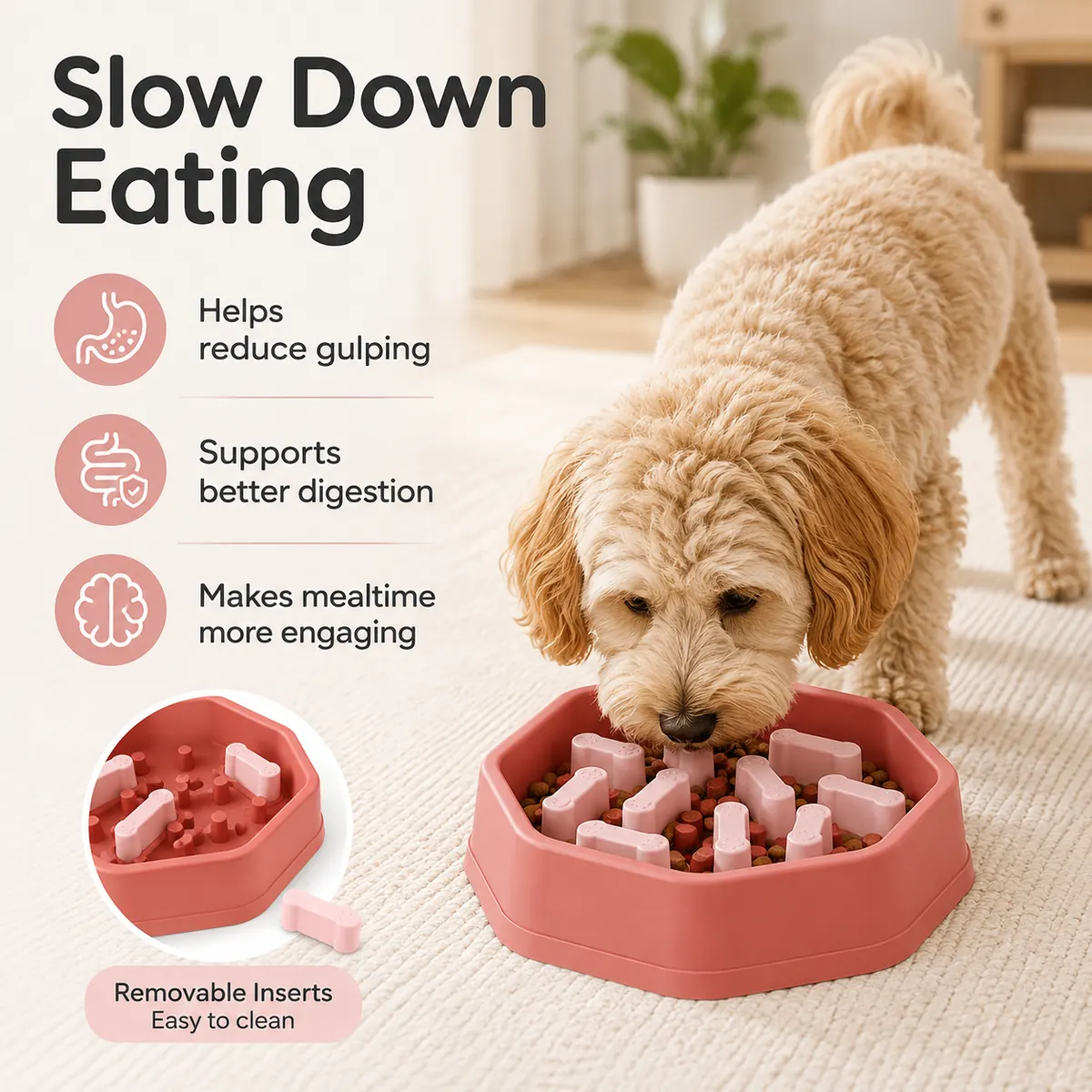
- Food contact areas and disassembly for cleaning
- Included parts, color combinations and setup guide
Responsible-use boundary: Do not imply that one setting is correct for every dog or cat; owners should choose a comfortable feeding arrangement for the individual pet.
Reference note: When reviewing hygiene and care for the Adjustable Slow Feeder Bowl, compare the sample instructions with this independent reference: For feeding and storage hygiene, see the FDA guidance on pet-food storage and handling. It recommends retaining original package details and keeping bowls and storage tools clean and dry.