Two-zone mealtime designThe divider should create a useful routine, not just a visual feature
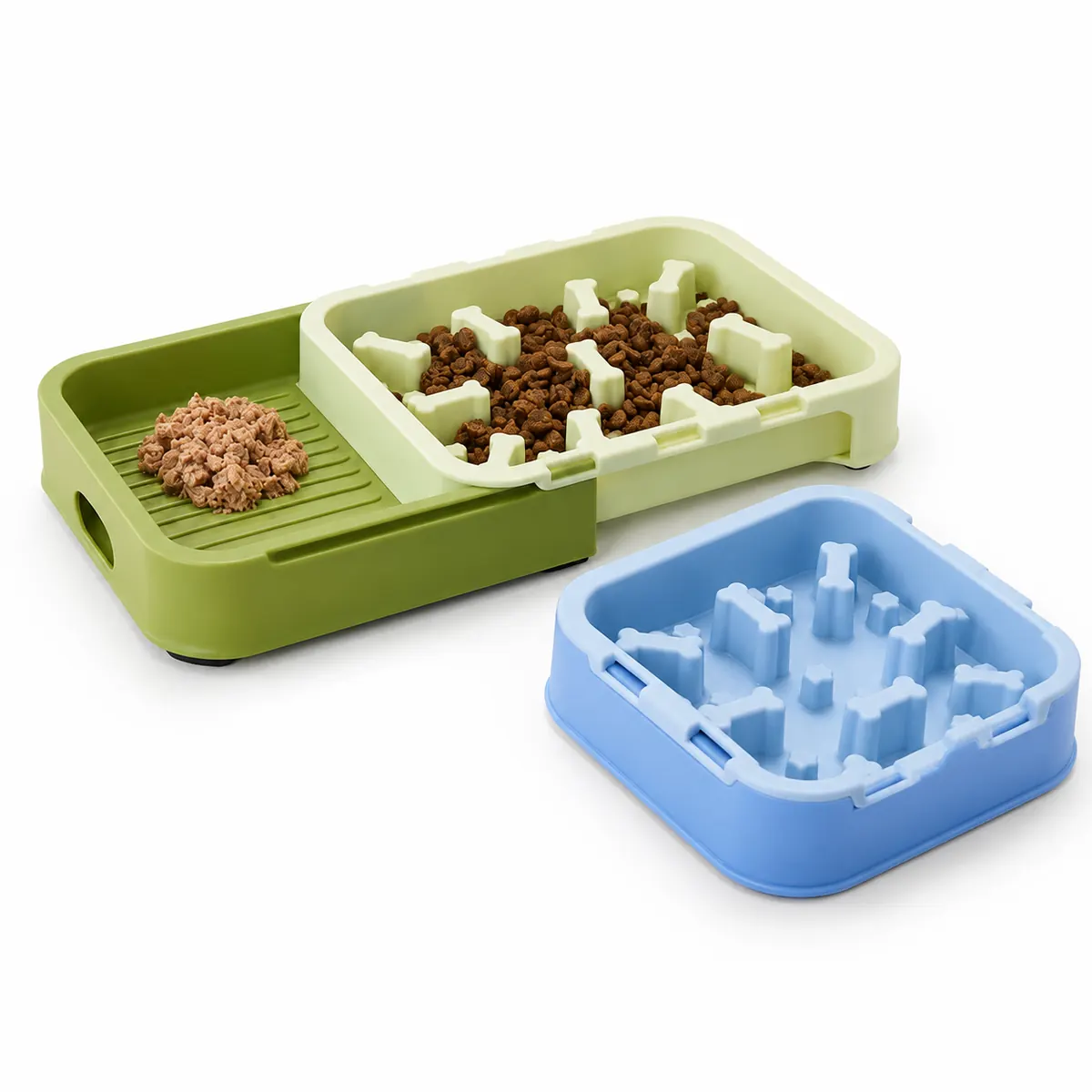
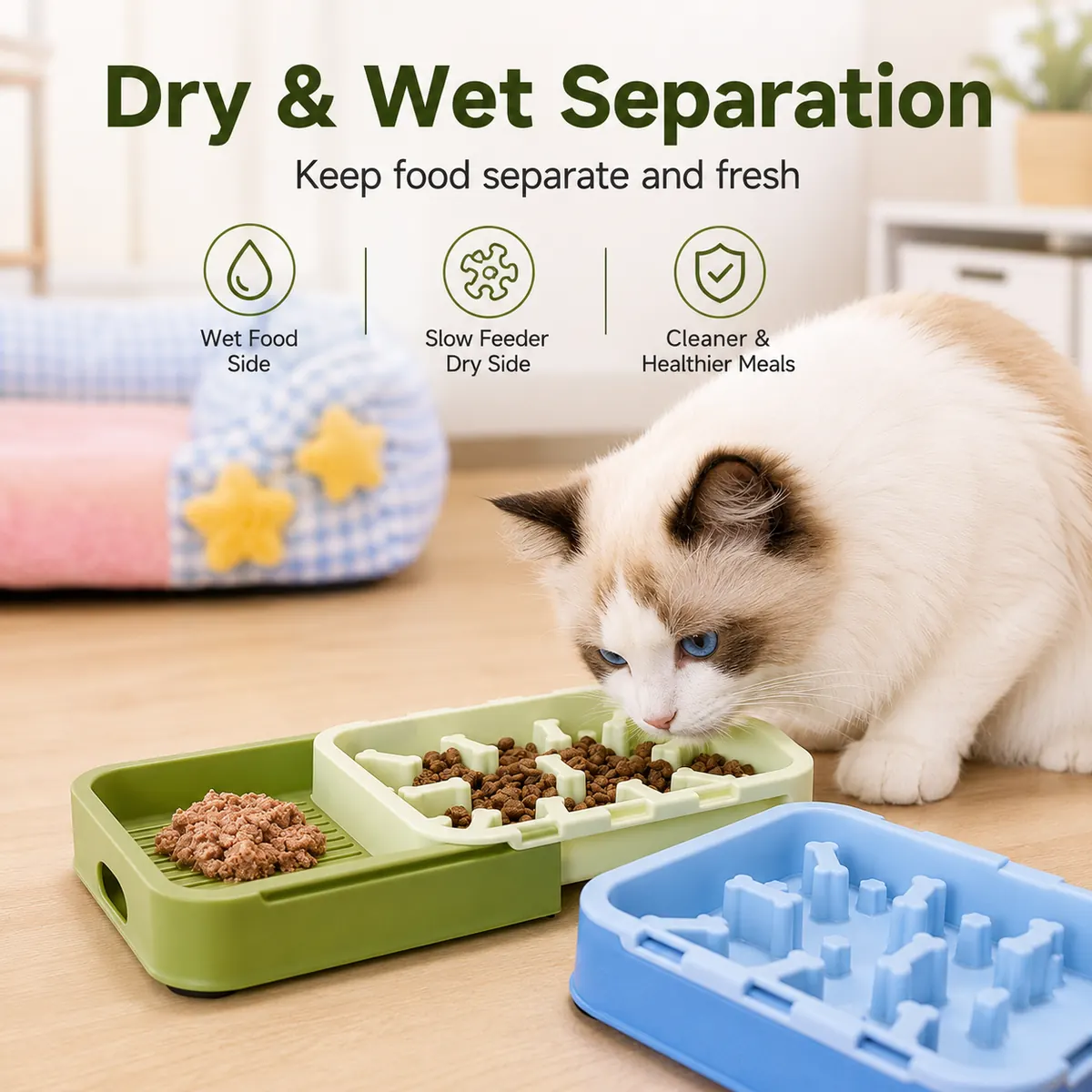
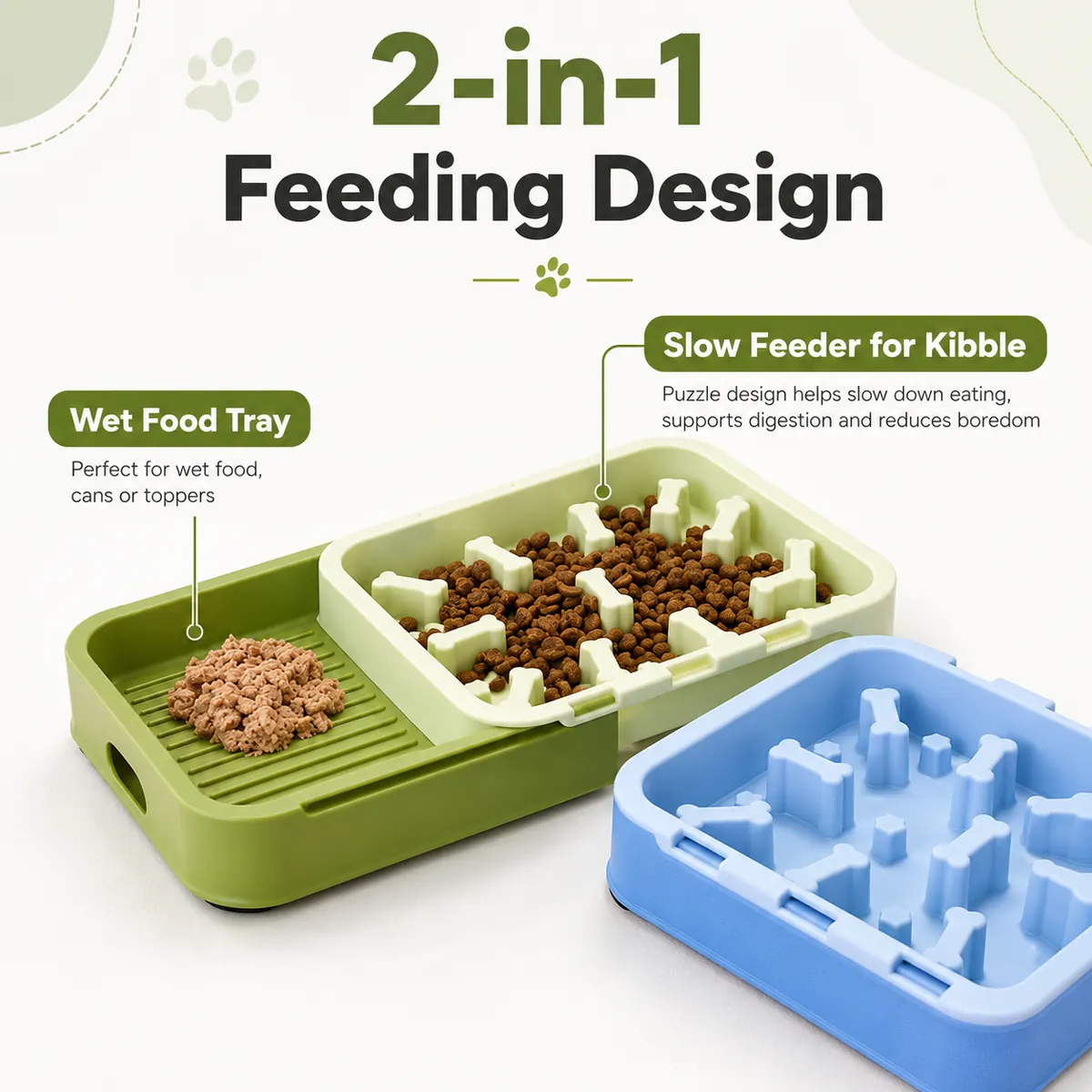
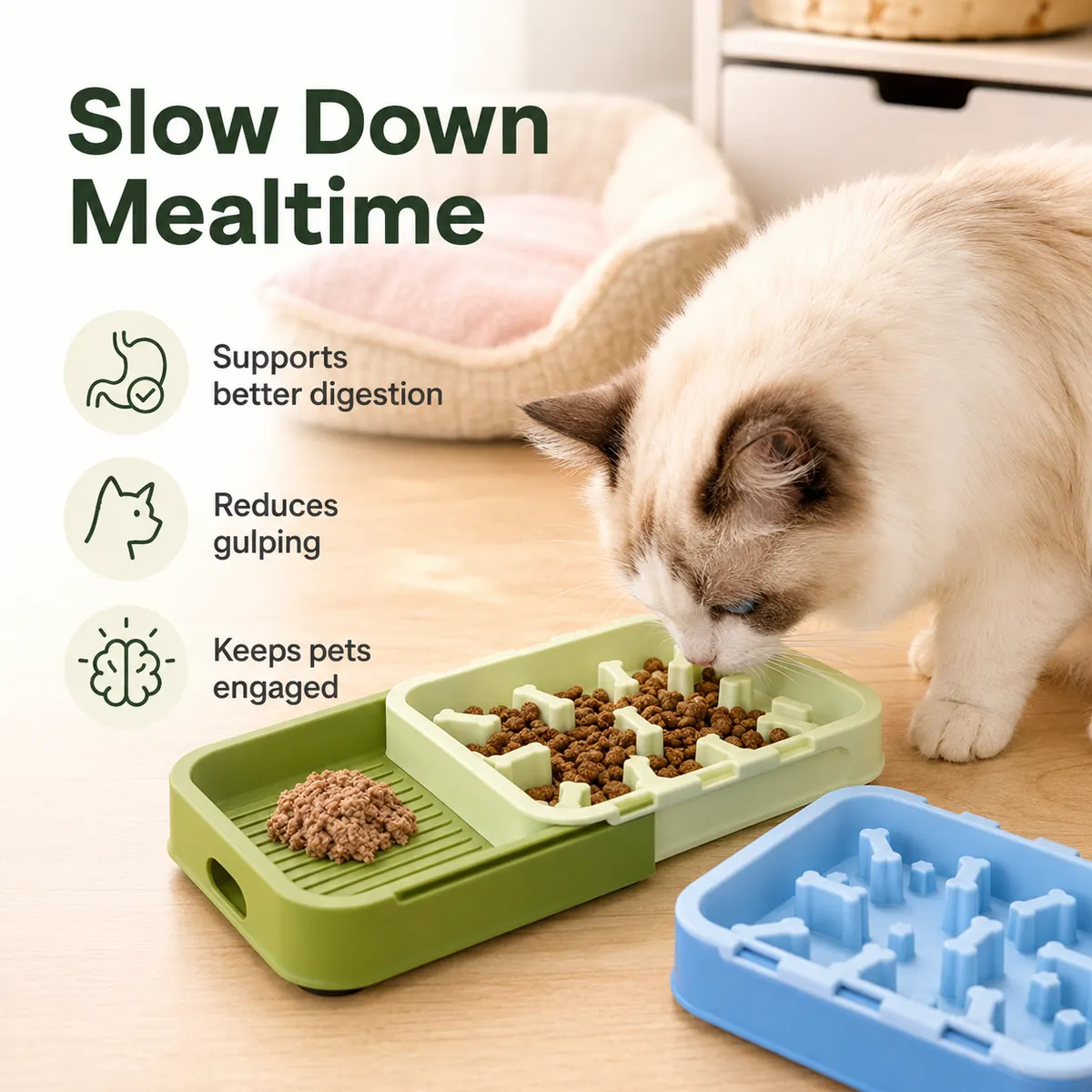
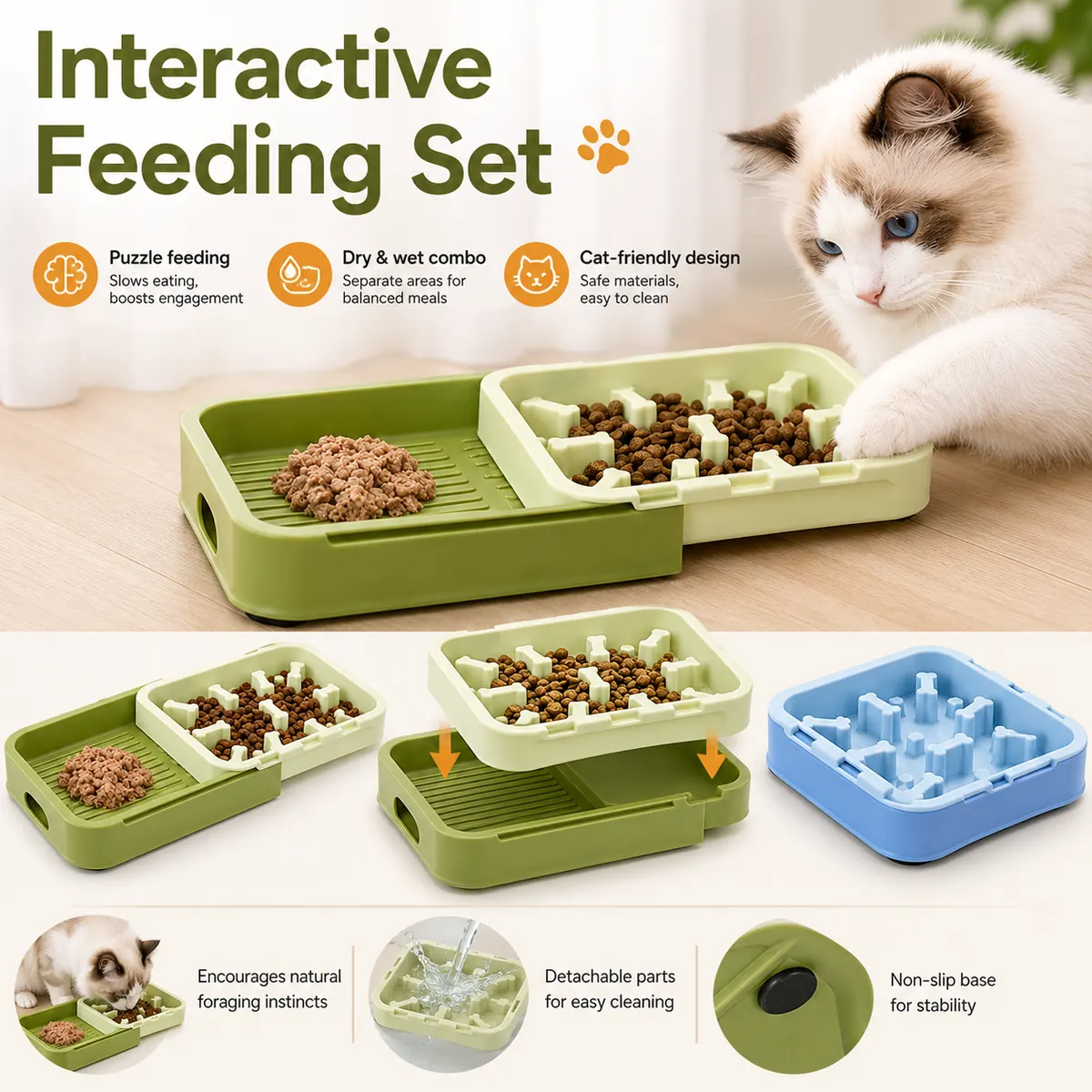
A divided slow-feeder bowl catches attention because it suggests portion separation, food variety or a combined feeding layout. Buyers should decide the intended scenario before approving the mold. Wet and dry food, two dry portions and food-plus-water each create different requirements for divider height, capacity and cleaning.
Test separation with the food types shown in marketing
Measure each compartment independently and check whether liquid or soft food crosses the divider when the bowl is nudged. The maze pattern should remain reachable in both zones and leave enough space for washing. Evaluate base stability with uneven loading because one compartment may empty before the other.
Explain the layout with a simple top-down story
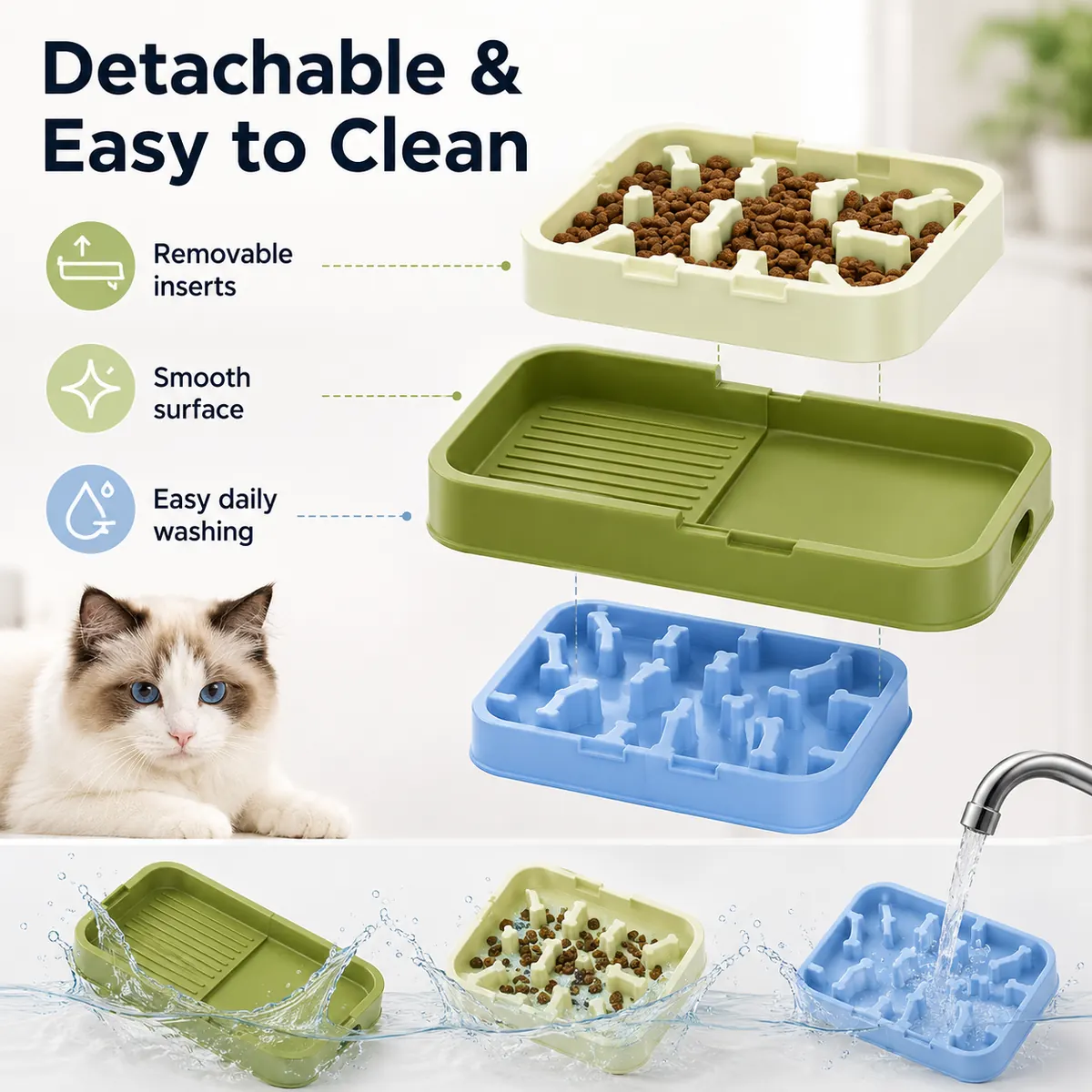
Top-view photography, labeled compartment capacities and one suggested routine help customers understand the difference from an ordinary bowl. Avoid showing a use that has not been tested. If accessories or removable inserts are included, list every component on the package and verify that replacement or reorder descriptions use the same names.
Questions to settle on the Divided Slow Feeder Bowl sample
- Capacity of each compartment and total usable volume
- Divider height and cross-flow behavior
- Maze access, edge finish and cleaning reach
- Uneven-load stability and included component list
Responsible-use boundary: Do not imply nutritional or veterinary benefits; the divided format is a feeding organization feature unless supported by specific evidence.
Reference note: When reviewing hygiene and care for the Divided Slow Feeder Bowl, compare the sample instructions with this independent reference: For feeding and storage hygiene, see the FDA guidance on pet-food storage and handling. It recommends retaining original package details and keeping bowls and storage tools clean and dry.